
Dental Bridge in Scranton, PA
In Scranton’s Nay Aug Park, the Paul Kanjorski Covered Bridge provides a sturdy crossing over Roaring Brook, offering scenic views of the gorge and the rugged rock ledges below. This quiet structure connects two sides of the park, making the space feel whole. In a similar way, dental bridges span the gap left by missing teeth. By filling in the space, a dental bridge restores your smile, helping you feel complete again.
If you need to replace one or more lost teeth, we can help. With decades of experience helping patients restore their smiles, you can trust our team to help you feel like you again.
What Is a Dental Bridge?
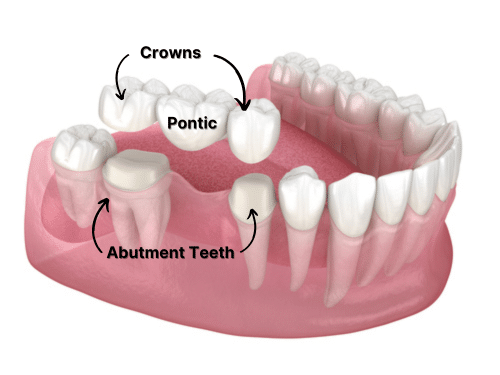
Think of a traditional dental bridge like a small suspension bridge for your mouth. Just as a real bridge needs support on either side to span a canyon or river, a dental bridge relies on the teeth next to the missing one to hold it in place. These neighboring teeth are fitted with crowns, which act like anchor points. Between them sits the replacement tooth, known as a pontic, which fills the empty space and restores your smile.
In most cases, a traditional bridge is supported by two healthy teeth—one on each side of the gap. But if you only have one strong tooth next to the missing spot, a cantilever bridge may be an option. It uses just that single tooth for support.
And for a missing front tooth, where the bite pressure is lighter, a Maryland bridge can be used. This bridge attaches to the backs of nearby teeth using metal or porcelain wings. It’s kind of like a dental version of invisible tape.
Each type of bridge has its place, but we often recommend implant-supported bridges because they tend to offer better outcomes.
Traditional Dental Bridge vs. Implant-Supported Bridge
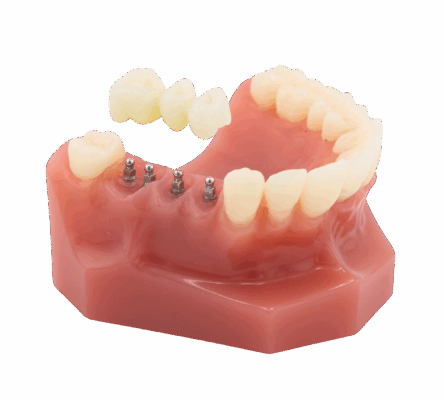
For years, traditional dental bridges have helped people fill gaps in their smiles. These bridges use crowns placed on nearby healthy teeth to hold the artificial tooth in place. While this approach can be effective, it does have some downsides. The supporting healthy teeth need to be reshaped, which means removing some of the enamel. Since enamel doesn’t grow back, this step is permanent. Plus, putting extra stress on these teeth can make them more likely to wear down or get damaged over time.
Implant-supported bridges are a modern solution that solves these issues. Instead of relying on other teeth, we place dental implants into the jawbone to provide support. That means no grinding down healthy teeth. These small titanium posts provide a strong and stable base, giving the bridge a more secure fit. With this added security comes increased chewing power, allowing you to bite and chew confidently.
While it’s not something you’ll notice day to day, implant-supported bridges also help to maintain your jawbone health. When you lose a tooth, the jawbone in that area will start to shrink because it’s no longer stimulated from chewing. Traditional bridges don’t address this issue since they sit above the gums and don’t connect to the bone. But mini dental implants act like tooth roots, keeping the jawbone engaged each time you bite and chew. This helps preserve your facial structure and prevents the bone loss that can make future dental work more difficult.
In the long run, supporting your jawbone with implants can make a real difference in your oral health.
Why We Use Mini Dental Implants
At the Mini Dental Implant Center of America in Scranton, PA, we proudly use mini dental implants for many of our restorative treatments. Dr. Hazzouri Jr., Dr. Genello, and Dr. Knott have extensive experience placing these implants, and patients benefit from their many advantages over traditional, two-piece dental implants:
- Narrower width: Mini dental implants are half the width of traditional dental implants. That means more people are eligible for them, including patients with bone loss. Their slim profile allows for placement in areas where standard implants might not fit.
- Upgraded design: Made as just one single piece, mini implants eliminate the tiny connection points between pieces that can trap bacteria. This streamlined design improves durability and supports long-term oral health by reducing the risk of infections.
- Gentler placement: We don’t need to cut into the gums or use stitches when placing a mini implant. And because the implant is so slim, it disturbs less of the gum or bone tissue when positioned in your mouth.
- Quicker results: Placing a mini implant is a more efficient process, and patients can often receive their implants and restorations on the same day. There’s no need to wait months for healing like with traditional implants.
- Faster recovery: The minimally invasive procedure allows patients to resume their normal routines more quickly, typically within 24 to 48 hours.
- Lower cost: Mini implants are about half the cost of traditional implants. Fewer appointments and a quicker process help keep expenses down.
- Equal survival rates: Despite their smaller size, mini implants have survival rates comparable to standard implants. When placed correctly and properly cared for, they offer reliable, long-lasting results.
By choosing a mini implant-supported bridge, you get to enjoy all these benefits while restoring your smile with a secure and durable solution.
Rebuild Your Smile With a Dental Bridge
Dental bridges are a reliable way to replace missing teeth and bring back your smile’s strength and appearance. While traditional bridges have helped many patients, implant-supported bridges (especially those secured with mini dental implants) offer greater stability, better jawbone support, and better long-term results.
With decades of experience and a genuine focus on patient-centered care, our team offers advanced solutions tailored to your needs. Schedule a free consultation today and discover how a custom dental bridge can help you smile with confidence again.
Frequently Asked Questions
With an implant-supported bridge, we can replace anything from a few missing teeth in a row to a full arch of teeth!
For those who need to replace an entire row, we can use a series of mini implants to support a roundhouse bridge. Imagine the Tunkhannock Creek Viaduct in Nicholson. This iconic structure stretches across the valley with a series of towering arches, each one working together to support the bridge’s weight. It’s strong, stable, and built for the long haul.
A roundhouse bridge functions much the same way in your mouth. Mini dental implants act like the viaduct’s vertical supports, anchoring the full arch of teeth securely in place. The result is a seamless, solid foundation that can handle the everyday demands of biting, chewing, and smiling, all without shifting or slipping like a traditional denture might.
You’ll start with a free consultation, during which we’ll take detailed images of your mouth to see what’s possible. If you’re a good fit for a mini implant bridge, we’ll schedule your placement appointment.
On the day of the procedure, we’ll gently numb the area, extract any teeth that need to be removed, and place the mini implants into the jaw. We’ll also take impressions and place a temporary bridge, so you leave with a full smile that same day. After a short healing period, you’ll return for your final bridge, which we’ll securely cement in place for a natural look and feel.
Nope! Dental bridges are fixed in place, so you won’t need to remove them like a partial denture. Once your bridge is secured, especially if mini implants support it, it stays put. You’ll be able to speak, eat, and smile confidently without worrying about anything slipping or shifting. If it needs maintenance, just give our office a call!
Caring for your bridge is similar to caring for natural teeth. Brush twice a day, floss daily, and use tools like floss threaders or a water flosser to clean around and under the bridge. If your bridge is supported by mini implants, keeping the area clean is extra important to protect your gum and bone health. And of course, don’t skip your regular checkups. We’ll keep an eye on everything and make sure your bridge stays in great shape for years to come.
Related Videos
- What Is a Dental Implant?
- What Is a Mini Dental Implant?
- What Is an Endosseous Implant?
- Conventional Implants vs Mini Implants
- What If I Dont Have Enough Bone for a Conventional Implant?
- Do You Offer Same-Day Dental Implants?
- Benefits of Mini Dental Implants
- Advantages of One-Piece Implants
- Denture Options at Hazzouri Dental
- What Can Be Done About Loose Dentures?
- Can My Denture Be Converted Into an Implant Denture?
- Benefits of Implant Dentures
- Who Is a Candidate for an Implant Denture?
- What Is a Snap-In Denture?
- What Is an All-on-4?
- What Is a Fix-on-Six?
- What Is a Roundhouse Bridge?
- What Is an Implant-Supported Bridge?
- How Many Implants Are Needed To Stabilize My Denture?
- How Long Does the Implant Denture Process Take?
- How Do I Care for My Implant Dentures?
- What Is Full-Mouth Reconstruction?
- Will Implant Dentures Affect My Ability to Eat and Speak?
- How Much Do Implant Dentures Cost?